
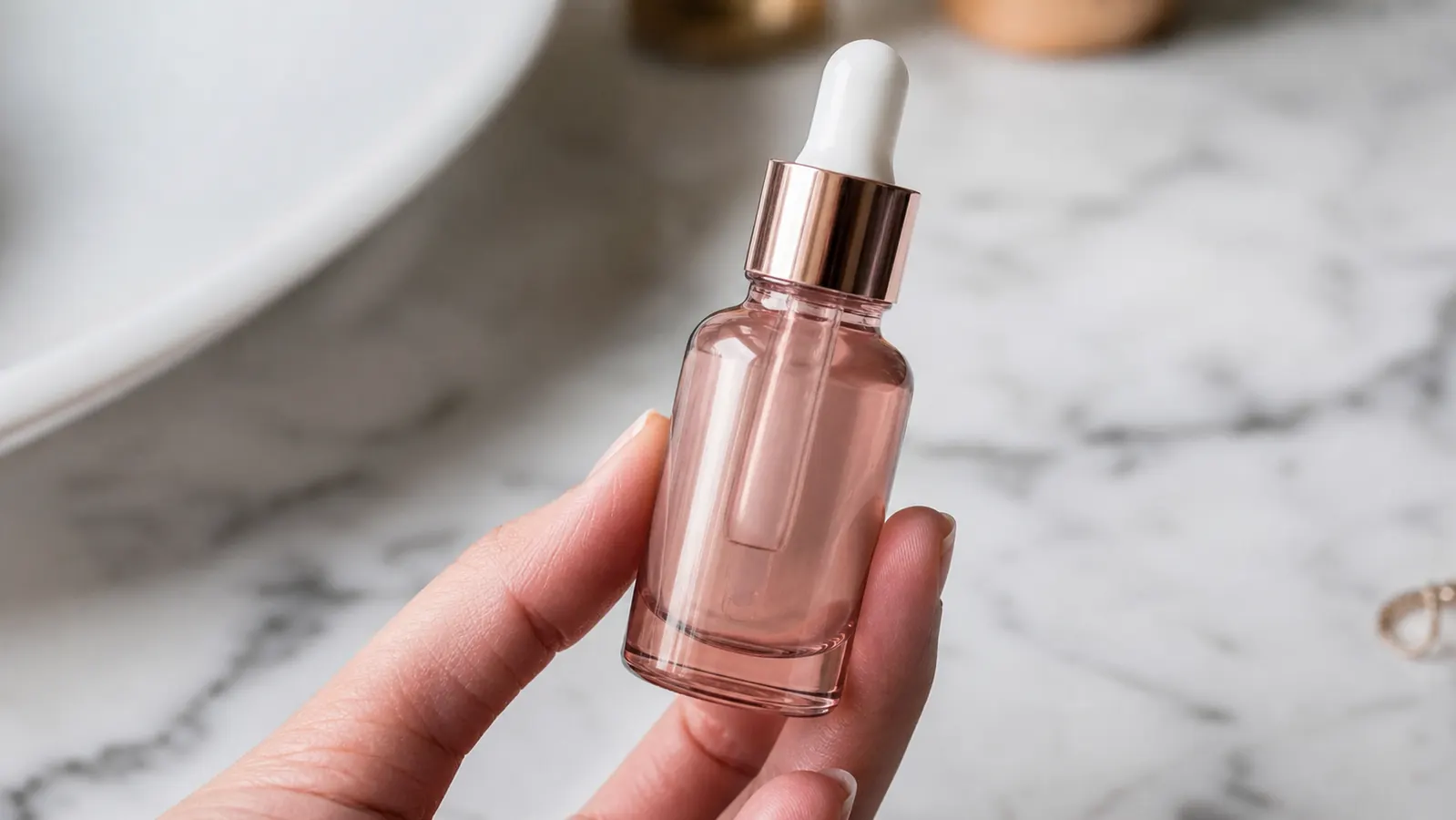
There is a version of this review that writes itself. Over 16,000 people have rated the medicube PDRN Pink Peptide Serum on Amazon, averaging 4.4 stars. TikTok has turned it into a shorthand for 'affordable salmon DNA serum.' The before-and-afters are everywhere. I could just quote the crowd and call it a day.
I am not going to do that. Because when I flipped this bottle over and read the INCI list carefully, I found a formula that is genuinely interesting in some places and quietly oversold in others. If you want to know whether the label backs up the hype, this is the review for you. If you want confirmation that it is magic, there are plenty of TikToks for that.
The Quick Verdict
A well-designed brightening serum with real peptide and niacinamide support. PDRN is present but not the star of the formula. Buy it for the full package, not just the salmon DNA claim.
Amazon Check Today's Price →Read the label first. Then decide. Here is where to check today's price.
The medicube PDRN Pink Peptide Serum is available on Amazon. With over 16,000 reviews and Prime shipping, it is one of the easiest ways to try a PDRN serum without committing to a Korean skincare import.
Amazon Check Today's Price on Amazon →What PDRN Actually Is and Why Concentration Matters
PDRN stands for polydeoxyribonucleotide. It is a fragment of DNA extracted from salmon sperm (or, in some newer formulas, plant-derived sources), and it gained serious traction in clinical dermatology before it crossed over into skincare. The mechanism that gets researchers excited: PDRN binds to adenosine A2A receptors in skin cells, which are linked to wound healing, collagen stimulation, and reduction of inflammatory signaling. It was used in medical settings for post-procedure skin recovery before brands started putting it in bottles at Sephora.
Here is the honest catch. PDRN is a fragile, large-molecule active. Getting it through intact skin and into the dermis where it does its best work is genuinely difficult without the delivery mechanisms used in clinic settings. In a topical serum, the evidence for transdermal penetration at cosmetic concentrations is promising but not settled science. This does not mean it does nothing. It means the realistic expectation is surface-level skin-conditioning and support for the skin's natural repair processes, not the dramatic regeneration you would get from a medical-grade PDRN injection. That distinction matters when you read a product label.
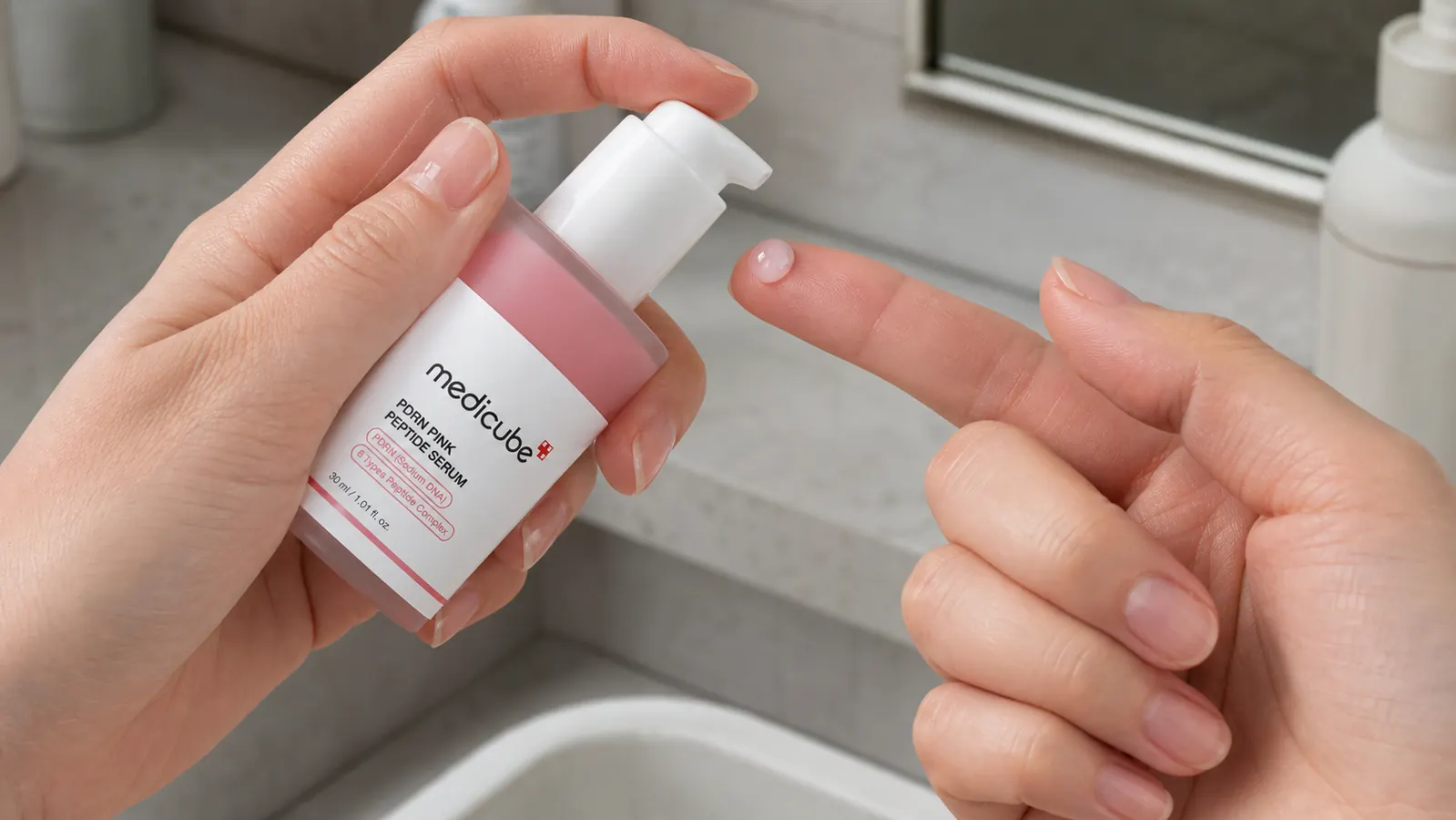
Reading the Ingredient List: Where PDRN Actually Sits
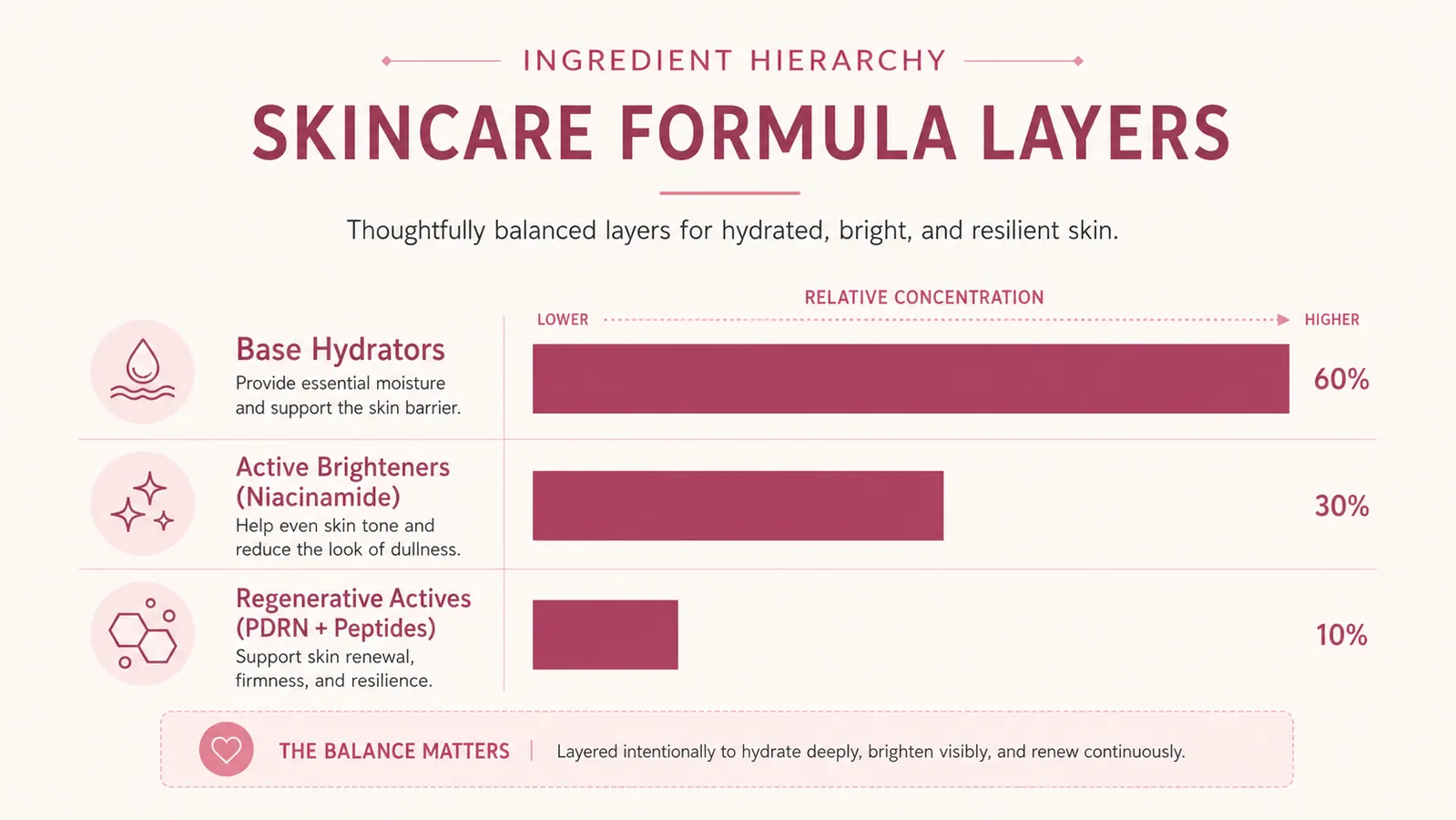
INCI lists are ranked by concentration, highest to lowest, down to the 1% threshold where the order becomes discretionary. When I look at the medicube PDRN Pink Peptide Serum label, PDRN (listed as Polydeoxyribonucleotide) appears well down the list, after the water base, glycerin, niacinamide, and several film-forming and thickening agents. This places it almost certainly at or below the 1% mark.
Does that disqualify it? Not in my view, no. At sub-1% concentrations, some actives are genuinely functional at trace levels. PDRN's receptor-binding activity is dose-dependent, so lower concentration means more modest effect rather than zero effect. The honest framing is: the PDRN in this serum is a supporting player, not the lead. Knowing that shifts your expectations in a useful direction and stops you from feeling cheated when the results are subtle rather than transformative.
The PDRN is real. The concentration is modest. Buy this serum for what the full formula does together, not for the salmon DNA claim alone.
The Supporting Cast: Niacinamide and Peptides Do the Heavy Lifting
This is where the formula gets interesting. Niacinamide appears high on the list, which suggests it is present at a meaningful percentage. Niacinamide (vitamin B3) is one of the best-studied ingredients in cosmetic dermatology. At 2% and above it visibly reduces post-inflammatory hyperpigmentation, minimizes the appearance of pores, regulates sebum production, and strengthens the skin barrier. These are not marketing claims. These are outcomes confirmed in multiple randomized controlled trials. Whatever the PDRN is or is not doing, the niacinamide is carrying a real load here.
The peptide complex deserves attention too. The formula includes multiple peptide types, including signal peptides and carrier peptides, which are the two classes with the strongest evidence base for skin benefits. Signal peptides mimic wound-healing messengers and prompt fibroblast activity. Carrier peptides chelate copper and zinc to support collagen synthesis enzymes. Neither works overnight. Both, used consistently over weeks, can contribute to improved skin texture and firmness. Pairing peptides with PDRN makes sense mechanistically because they are targeting overlapping pathways around cell repair and renewal.
The pink color, which is very photogenic and very TikTok-friendly, comes from a small amount of colorant. It does not serve a skincare function. The texture is lightweight gel-serum: low viscosity, fast absorption, no noticeable slip or residue. These are practical formulation choices that make it easy to layer under SPF or a richer night cream.
What the Formula Cannot Do (Honest Tradeoffs)
If your primary goal is deep skin regeneration at a clinical level, this formula will not replicate what a dermatologist does. The PDRN concentration is too modest, and topical penetration of intact PDRN has limits that even premium serums cannot fully overcome without occlusive techniques or micro-needling. This is a category-wide limitation, not a medicube-specific failure.
There is no retinol, no AHA or BHA, and no vitamin C in this formula. That is not a criticism. It is a design choice. This serum is built to be gentle and stackable, not to be a comprehensive anti-aging treatment on its own. If you come in expecting it to replace an exfoliating acid or a dedicated vitamin C serum, you will be disappointed. Think of it as a calming, brightening, hydrating base layer that adds regenerative support on top of whatever actives you are already using.
The base hydrators deserve a mention because they are doing quiet, underappreciated work. Glycerin sits high in this formula and functions as a humectant, drawing water from the environment into the top layers of skin. This is part of why the serum feels immediately comfortable and why skin looks a little more plump within the first few minutes of application. It is not PDRN magic. It is good, reliable formulation doing what good formulation does. That is worth knowing when you are trying to separate real regenerative effects from the immediate sensory experience.
One practical note on the alcohol question: the formula does contain some alcohol-based ingredients in small amounts, including a fragrance component. For extremely sensitive or rosacea-prone skin, this is worth knowing. The concentration appears low, and the formula includes calming agents to offset irritation risk, but it is not a completely fragrance-free formula if that matters to your routine.
Texture, Application, and How It Layers
This is where the serum earns its 16,000 reviews. The application experience is genuinely good. The pump dispenses a controlled amount without over-dispensing. The gel absorbs within about 30 seconds on bare skin. There is no pilling when you layer it under a cream or SPF, which is the practical test that matters in a multi-step routine. A lot of well-formulated serums fail this test because their film-formers conflict with the next product in line.
The scent is faint and pleasant, leaning toward a light floral, and dissipates quickly. Within two to three minutes of application I cannot detect it. For most people this is a non-issue. For people with fragrance sensitivity, it is worth noting before purchasing.
Skin feel after absorption: slightly plumped, matte-satin. Not greasy, not tight. The brightening effect attributed to niacinamide becomes visible over several weeks of consistent use, particularly around post-blemish marks and uneven patches. The effect is gradual. That is appropriate. Ingredients working at the cell level take time.
What I Liked
- Niacinamide is present at a meaningful concentration and delivers real brightening over time
- Multi-peptide complex targets collagen and cell repair pathways with evidence-backed actives
- Lightweight gel texture layers well under any moisturizer or SPF without pilling
- PDRN is genuinely in the formula, not just a marketing name on the label
- Over 16,000 Amazon reviews with consistent positive feedback across multiple skin types
- Accessible price point for what is a genuinely complex, multi-active formula
Where It Falls Short
- PDRN concentration is modest, likely sub-1%, so regenerative effects are subtle rather than dramatic
- Contains fragrance components, not ideal for genuinely fragrance-sensitive or rosacea-prone skin
- Not a standalone treatment: no exfoliating acids, no vitamin C, no retinol
- Pink color is cosmetic only and serves no skincare function whatsoever
- Topical PDRN penetration limits are a category-wide reality, not unique to this formula
What the Review Patterns Reveal About Who It Actually Works For
When you read through a large volume of 16,000 reviews, patterns emerge that the formula analysis alone cannot tell you. The reviews that report the most visible results share a common thread: they come from people with hyperpigmentation, post-acne marks, or dullness. This tracks directly with what the niacinamide is doing. Reviewers chasing firming or anti-wrinkle outcomes report softer, slower results, which also tracks: the peptide benefits require longer timelines and are subtler to measure than brightness changes.
The minority of reviewers who report no visible change tend to be either using it for only a week or two, or already running a high-potency niacinamide product elsewhere in their routine. If you already apply a 10% niacinamide serum daily, adding this on top adds PDRN and peptides to your stack but offers diminishing returns on the brightening front. That is useful to know before you buy a second bottle.
How It Sits in the Broader PDRN Serum Market
The PDRN serum market has expanded quickly over the past two years. At the accessible end you have medicube and VT Cosmetics. At the premium end you have Rejuran, which positions around higher PDRN concentrations and a more clinical heritage. Rejuran's formula leads with PDRN as the headline active and prices accordingly. Medicube bundles PDRN with niacinamide and peptides into a brightening-plus-repair story, which is a more honest reflection of what this particular bottle actually does.
For a head-to-head comparison of the medicube and Rejuran formulas, the full article is linked below. Short version: if maximum PDRN concentration is the priority and you are willing to pay a premium for it, Rejuran deserves a look. If you want a well-rounded serum that uses PDRN as part of a thoughtful multi-active formula at an approachable price, medicube makes a strong case.
Who This Formula Is Actually For
This serum makes the most sense for three groups of people. First, anyone dealing with post-blemish hyperpigmentation or uneven skin tone: the niacinamide alone justifies the purchase price. Second, people who want to add a PDRN and peptide layer to an already established routine without disrupting everything else they use: this formula plays well with almost any other product. Third, people new to K-beauty active serums who want something effective but low-irritation as a starting point before adding stronger actives later.
It is also a reasonable first step for anyone curious about PDRN who is not ready to spend clinic-brand pricing. The niacinamide and peptides make the investment worthwhile on their own terms, regardless of how much or how little the PDRN contributes to the final result.
Who Should Skip It
If you are specifically chasing the highest PDRN concentration available in a topical formula, this is not the right product. Serums formulated with PDRN higher in the ingredient list, and with shorter overall ingredient decks, give the active less competition for concentration real estate. If PDRN is your single goal, the formula math here works against you.
Skip it also if you need a genuinely fragrance-free formula due to reactive or sensitized skin, or if you are already running a high-potency standalone niacinamide product and do not need more from this layer. And skip it if you are expecting it to perform like a medical PDRN treatment. That is not what any serum can do, regardless of what the marketing implies.
If the formula checks your boxes, today's price on Amazon is worth looking up.
The medicube PDRN Pink Peptide Serum ships with Prime, returns are straightforward, and with over 16,000 reviews you have a large enough sample to read past the hype and find what it actually does for real people. Check current pricing below.
Amazon Check Today's Price on Amazon →