
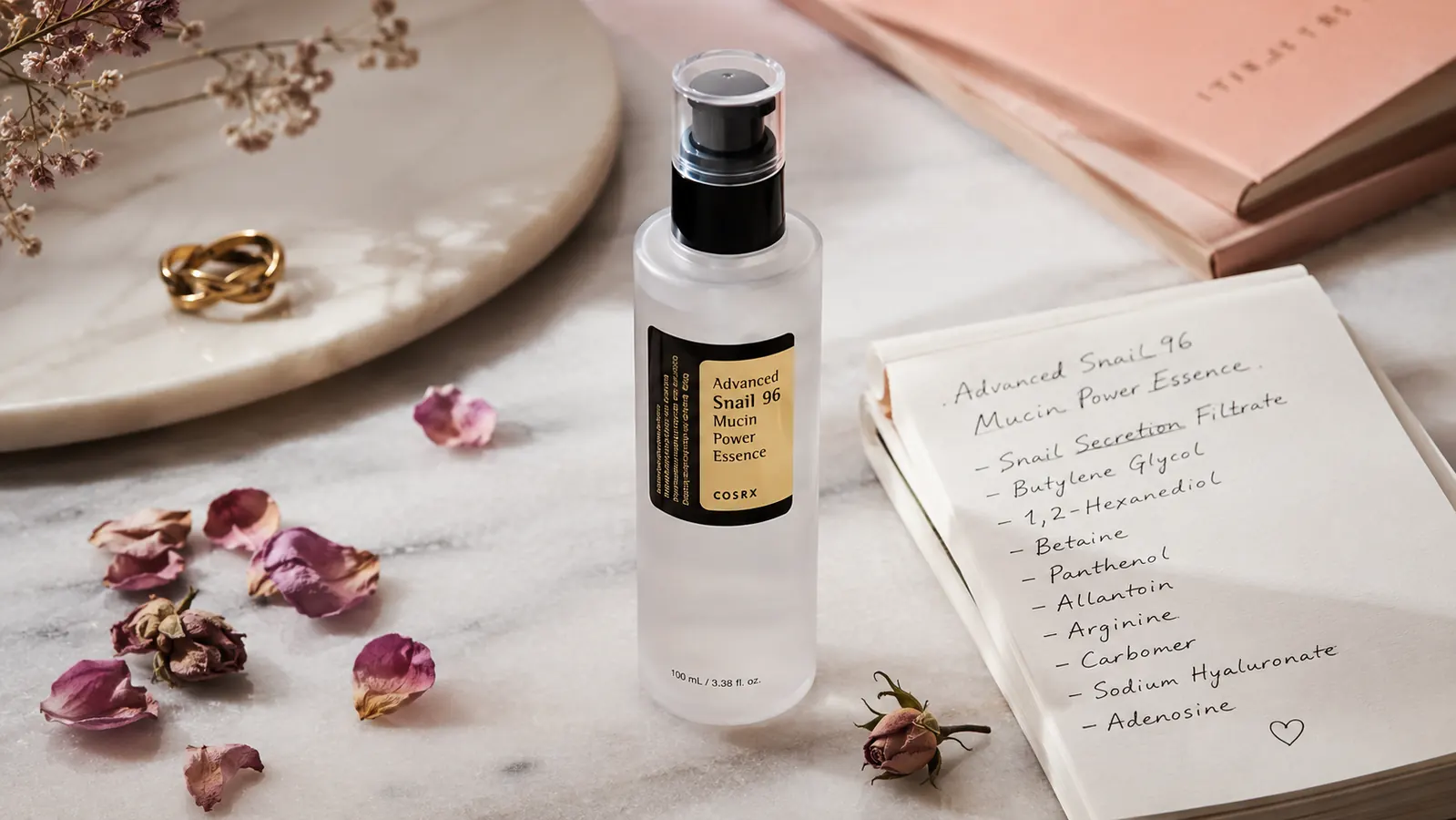
One hundred thousand five-star reviews is the kind of number that should make an ingredient-literate person suspicious. Skincare marketing is full of feel-good formulas that smell nice and do very little, and the review counts on those are high too. So when I started genuinely digging into the COSRX Snail Mucin 96% Repairing Serum, my opening question was not whether people liked it. It was whether the science behind what they were experiencing is actually understood, or whether we are all responding to a well-marketed placebo with a satisfying gel texture.
The answer turned out to be more interesting than either extreme. Snail secretion filtrate is one of the few cosmetic ingredients with a real body of peer-reviewed research behind it, not just brand-funded studies but independent clinical work. What that research shows, and what it does not show, tells you a lot about why this serum works for some concerns and genuinely cannot deliver on others. If you are reading ingredient labels, this is the deep dive worth having before you buy or dismiss it.
The Quick Verdict
The ingredient science is real, the concentration is honest, and the formula does what it claims. Just do not expect it to replace a dedicated anti-aging routine. Barrier repair and surface renewal, yes. Structural regeneration, no.
Amazon Check Today's Price →Before you spend on a trendy PDRN serum, read your skin's actual problem first. If barrier repair is the gap, this affordable bottle covers it better than most products at three times the price.
COSRX Snail Mucin 96% Repairing Serum. Over 104,000 Amazon reviews. 4.5-star rating. Budget-priced, Prime shipping.
Amazon Check Today's Price on Amazon →What Snail Secretion Filtrate Actually Is
Cosmetics brands describe snail mucin in vague, marketing-friendly language: regenerating, repairing, renewing. The actual biology is more specific. Snail secretion filtrate is the collected and filtered mucus produced by Cryptomphalus aspersa or Helix aspersa snails, most commonly Helix aspersa Muller, the garden snail. This secretion is a complex biological mixture, and its composition is what makes it interesting from a skincare standpoint.
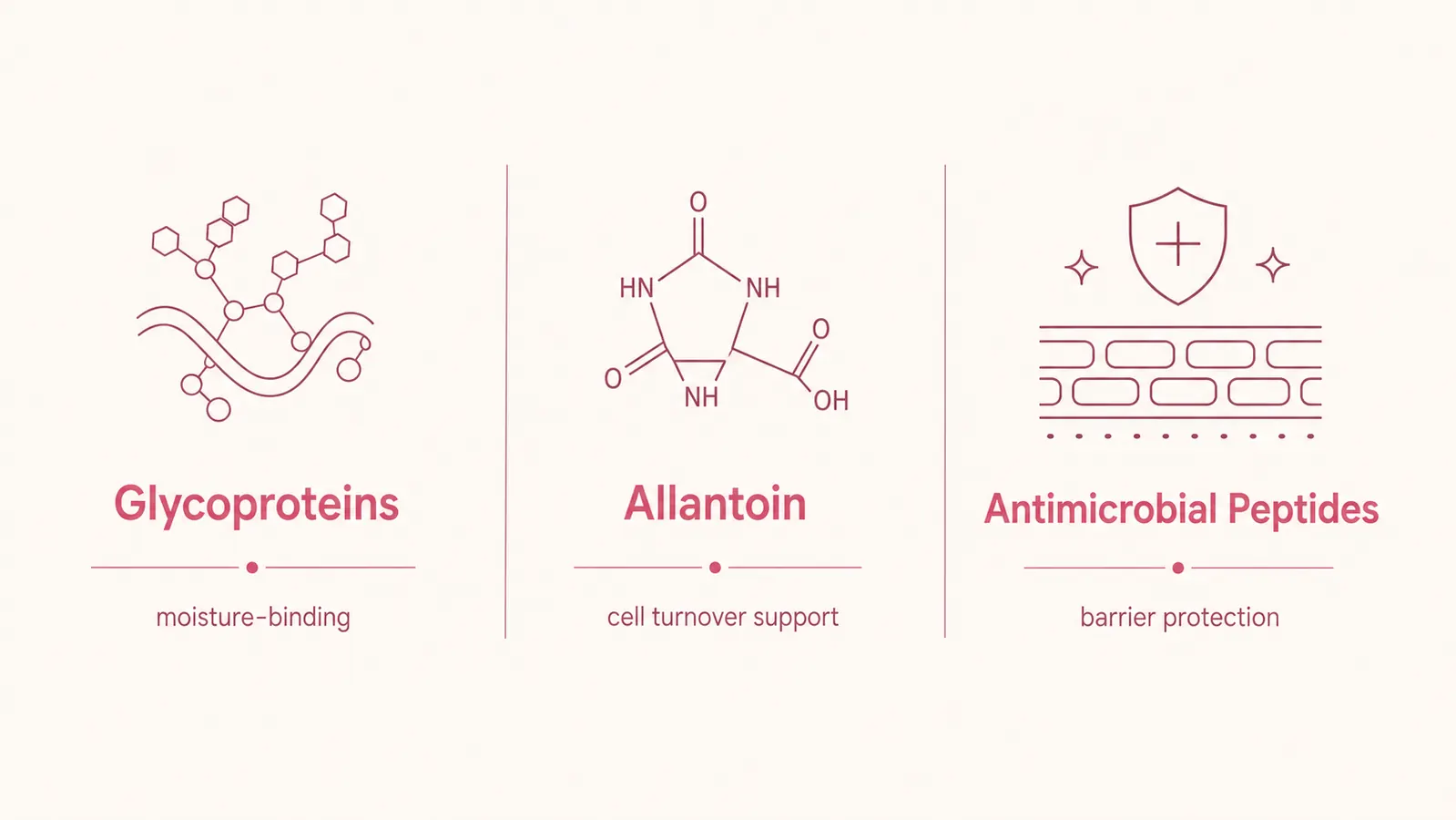
The primary active components are glycoproteins, glycosaminoglycans (which include a hyaluronic acid analog), allantoin, proteoglycans, antimicrobial peptides, and a small amount of glycolic acid, measured in concentrations too low to exfoliate but potentially relevant for cell-surface communication. The glycoproteins are responsible for the moisture-binding and barrier-support properties. Allantoin is a well-studied skin-conditioning agent that supports cell proliferation and wound healing. The antimicrobial peptides help maintain a healthy skin microbiome and protect against minor pathogenic bacteria, which is relevant for acne-prone skin.
What makes this mixture notable is that it evolved for biological repair. The snail produces this secretion in response to physical damage to its own body, which means it contains compounds specifically designed to support tissue recovery. That is not a marketing claim. It is the biological rationale that drove researchers to investigate it for dermatological applications in the first place.
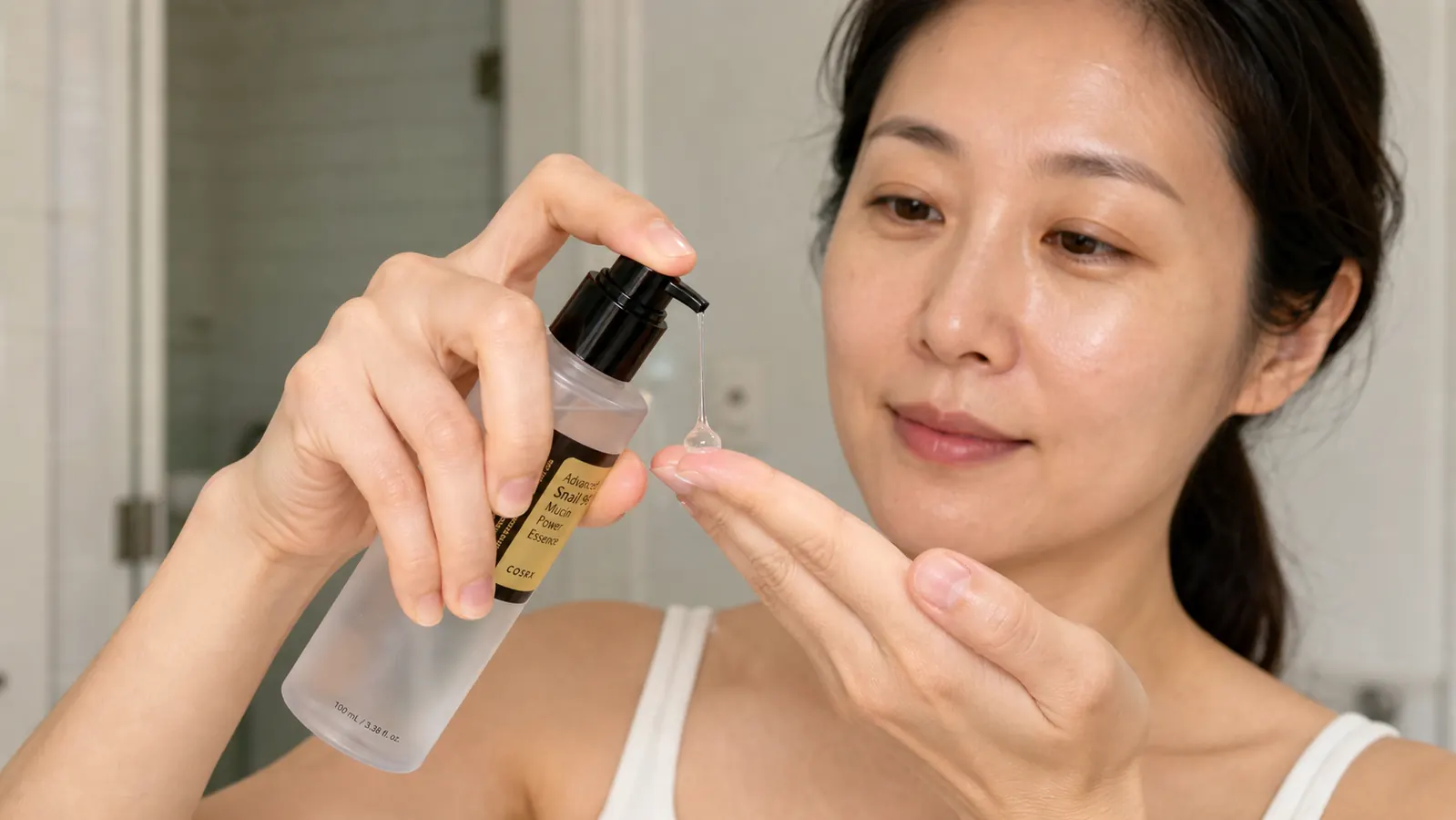
What the Peer-Reviewed Research Actually Says
The most cited study in this area is a 2013 paper published in Dermatologic Surgery, which examined the use of Cryptomphalus aspersa secretion in patients recovering from laser resurfacing procedures. The patients using the snail secretion formulation showed faster re-epithelialization and reduced post-procedure erythema compared to the control group. This was not a consumer cosmetic study. It was a wound-healing study with measurable clinical endpoints, which is a higher bar than most skincare ingredients ever clear.
Subsequent work has looked at snail secretion filtrate for photoaging, acne scarring, and barrier function. A 2015 study in the Journal of Drugs in Dermatology found improvements in fine lines and overall skin texture after 12 weeks of use, which sounds promising until you look at the study design: it was small, manufacturer-funded, and used a proprietary Cryptomphalus aspersa secretion concentration that is not necessarily equivalent to the snail secretion filtrate in mass-market K-beauty products. The results are encouraging, not conclusive.
The honest summary is this: the evidence for snail secretion filtrate is strongest for barrier repair and wound-adjacent healing. It is suggestive but not definitive for anti-aging and fine-line reduction. And it is limited for anything relating to deeper structural regeneration, the kind of cellular renewal that PDRN serums work toward. Knowing which bucket your skin concern falls into tells you whether this serum is the right tool.
The evidence is strongest where the marketing is quietest: surface barrier repair. And weakest where the marketing is loudest: anti-aging regeneration. That gap is worth understanding before you open your wallet.
The Concentration Question: What Does 96% Actually Mean?
COSRX puts 96% snail secretion filtrate on the label, which is an unusually high declaration for a single active ingredient. Most serums with a hero ingredient hover between 2% and 20%. So the natural question from an ingredient-literate reader is: what exactly is in that 96%? The answer has some nuance that most reviewers do not address.
The 96% figure refers to the proportion of the formula that is listed as snail secretion filtrate as an ingredient declaration, not necessarily a purified active concentration. In practice, raw snail secretion filtrate as collected is already a diluted aqueous solution. The snail does not produce a concentrated serum. When COSRX says 96%, they mean that 96% of the total formula weight is occupied by the filtrate ingredient, which itself is a natural mixture of water, glycoproteins, and the other active components described above. The remaining 4% is preservatives, pH adjusters, and one or two supporting humectants.
This is not a criticism. It is context. When other serums claim a high concentration of a synthetic active like niacinamide at 5% or 10%, that percentage refers to a pure compound at a known molecular weight. Snail secretion filtrate at 96% is a different kind of number. The formula is genuinely dominated by the filtrate, but the functional potency of that filtrate depends on how it was collected, processed, and stabilized, none of which COSRX discloses publicly. That is common in cosmetics and does not make the product less effective. It just means the number tells you more about formula composition than about therapeutic dose.
What COSRX Does Not Tell You and Whether It Matters
There are four things the label and brand marketing do not address that ingredient-curious shoppers often ask about. First: the snail species and collection method. The efficacy data in the clinical literature is largely from Cryptomphalus aspersa secretion, a specific species. COSRX lists snail secretion filtrate generically, which is standard practice in cosmetics labeling but means you cannot confirm the specific biological source. Given that COSRX is a Korean brand using a well-established Korean cosmetics supply chain, the working assumption is that this is Helix aspersa or Cryptomphalus aspersa, the species most used in Korean manufacturing. But it is an assumption.
Second: the pH of the formula. Snail secretion filtrate is naturally mildly acidic, and its active components, particularly allantoin, are most functional at certain pH ranges. COSRX does not publish the formula pH, which matters for layering decisions if you are combining it with high-pH toners or alkaline cleansers. From texture and consumer testing, the serum appears to be in the 5.5 to 6.5 range, which is appropriate for skin barrier support.
Third: the preservation system. The formula uses sodium benzoate and phenoxyethanol, both widely used and generally well-tolerated, but worth knowing for people who react to certain preservatives. This is not a clean-beauty concern so much as a practical one: if you have ever had a preservative sensitivity, check the ingredient list before committing. Fourth: there is no published stability data on how the active glycoproteins hold up over the shelf life of the product or after the bottle is opened. Store it away from direct light and heat, and do not keep a bottle for more than 12 months after opening.
Why the 100,000 Reviews Are Mostly Correct (And Where They Mislead)
When you read through a sample of the COSRX reviews on Amazon, a pattern emerges quickly. The most enthusiastic positive reviews cluster around barrier repair, post-acne redness, and skin smoothness. People who were using harsh actives and got inflamed, people recovering from mild chemical burns, people dealing with persistent dryness that did not respond to moisturizers. These are exactly the concerns where the existing science supports snail secretion filtrate. The reviews are enthusiastic because the product is genuinely effective for the problems it is biochemically suited to address.
The reviews that express disappointment tend to cluster around expectations of brightening, wrinkle reduction, or dramatic skin transformation. Those expectations are not supported by the formulation. A serum that is 96% snail secretion filtrate, with no vitamin C, no retinol, no exfoliating acids, and no peptides beyond what occurs naturally in the filtrate, is not going to deliver brightening or significant anti-aging results. The disappointed reviewers did not have a bad experience with the product. They had a mismatch between their goals and what the formula can do.
This is not the brand's fault. COSRX markets the serum as a repairing and hydrating serum, which is accurate. The overreach happens in secondary commentary, blogs that describe it as a glass-skin serum or an anti-aging treatment, neither of which the ingredient profile supports as primary outcomes. If your skin goal is repair and hydration, the reviews are telling you the truth. If your goal is regeneration or brightening, you need a different or additional formula.

How Snail Mucin Fits Into a PDRN-Adjacent Routine
For people who follow the PDRN skincare space, snail mucin occupies a specific and compatible role. PDRN serums, which use polynucleotide technology to support fibroblast activity and deeper cell regeneration, are working at a different biological level than snail secretion filtrate. They are not redundant in a routine. Snail mucin addresses the stratum corneum and the upper dermal layers, supporting barrier function and surface healing. PDRN addresses deeper dermal activity, the fibroblast-level work that produces collagen and elastin over longer time horizons.
If you are building a routine around a PDRN serum and want to know how to incorporate snail mucin alongside it, the layering guide on combining snail mucin with PDRN walks through the exact application order and frequency that works without the two products competing. The short version: snail mucin in the morning as a repair and hydration base, PDRN in the evening as your regeneration treatment. They support each other rather than duplicating effort.
What snail mucin does for a PDRN routine specifically is create a stable, non-irritated skin surface that lets the PDRN actives work more effectively. If your barrier is compromised, active ingredients do not absorb and function the way they should. Snail mucin keeps the barrier healthy enough that your PDRN serum can do its intended job. Think of it as maintenance-level infrastructure that lets the higher-order actives function properly.
What I Liked
- Snail secretion filtrate has genuine peer-reviewed support for barrier repair and wound-adjacent healing, not just brand-funded claims
- 96% concentration means the formula is genuinely dominated by the active ingredient with minimal filler
- Fragrance-free, alcohol-free, no exfoliating acids that would conflict with a repair mission or reactive skin
- Compatible with PDRN serums and most active routines, does not compete or cause ingredient conflicts
- Cost-effective for 96ml makes it one of the most cost-effective single-ingredient repair serums available
- The 104,000 review count reflects a real and consistent user experience across diverse skin types and climates
Where It Falls Short
- The 96% concentration figure is a formula composition number, not a dose-equivalent to the purified actives used in clinical studies
- No published pH, stability data, or snail species disclosure, which limits precision for ingredient-literate users
- Does not address fine lines, firmness, or deep regeneration, the science does not support those outcomes at this formula level
- Some users report a mild tacky finish that does not fully absorb if applied to completely dry skin or in high humidity
- Animal-derived ingredient rules this out for vegan shoppers, unlike plant-based PDRN alternatives
Who Should Buy This Serum
Buy it if you are dealing with a compromised skin barrier, post-active inflammation, or persistent surface-level dryness that does not respond to standard moisturizers. Buy it if you want a fragrance-free, low-risk serum that can sit in your routine without requiring careful sequencing or timing. Buy it if you are building a PDRN-based regenerative routine and want a barrier-support layer that complements rather than duplicates the PDRN work. And buy it if you value a formula where the hero ingredient is backed by published clinical research, even if that research is not as deep as the review count implies.
Who Should Skip It
Skip it if your primary skincare goal is visible anti-aging, brightening, or structural regeneration. This serum is not formulated for those outcomes. You would be better served by a PDRN serum with polynucleotide technology, a retinoid, a vitamin C, or a combination. If you already have a stable, healthy barrier and you are optimizing for something beyond maintenance, the COSRX serum will not move the needle in a direction you will notice. It is a repair tool, not a transformation tool, and those are genuinely different things.
Skip it if you are vegan, as the secretion is collected from live snails and is an animal-derived ingredient. Skip it if you have a documented sensitivity to mollusk-derived proteins, which is uncommon but real. And skip it if you are hoping the hype translates to outcomes beyond what the formula is biochemically capable of delivering. The science is solid for what it is. The problem is only when the expectations outpace the chemistry.
You read the science. Now check whether the price still makes it worth adding to your routine.
COSRX Snail Mucin 96% Repairing Serum is available on Amazon with over 104,000 reviews and Prime shipping. If barrier repair is your gap, this is the most evidence-backed option at this price point.
Amazon Check Today's Price on Amazon →