
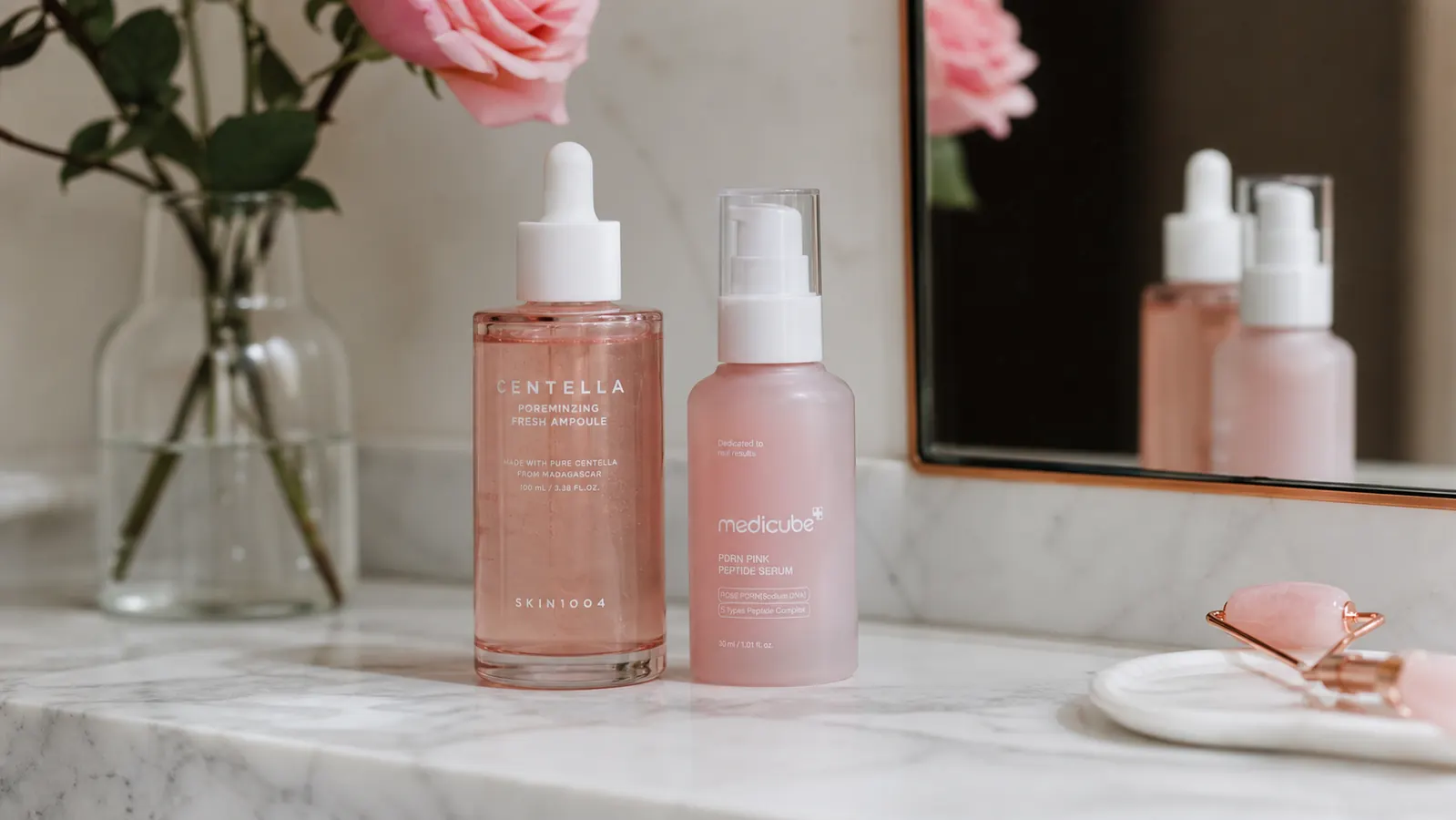
About six weeks ago I started keeping both the COSRX Snail Mucin 96% Serum and a PDRN serum on my shelf at the same time, and for the first two weeks I had no idea what order to use them in. Some nights I did snail mucin first, some nights PDRN, and at least once I skipped one entirely because I could not decide. I have combination skin that runs dry in the cheeks and oily through the T-zone, and I have been layering K-beauty products long enough to know that getting the order wrong does not just waste product, it actively prevents absorption. So I spent time reading through what each ingredient actually does at the skin barrier level, and I tested the pairing deliberately. What I found is that snail mucin and PDRN are more complementary than almost any other two-serum combination I have tried, but only when you understand which one does what.
The short version: snail mucin goes first, PDRN goes second. But the reason why is worth understanding, because it will change how you think about every serum in your routine. Snail secretion filtrate is a humectant and repair ingredient that works in the upper layers of the skin, pulling in moisture and creating the surface conditions where other actives can actually penetrate. PDRN, the polynucleotide ingredient driving half of K-beauty right now, is a repair and regeneration signal that works deeper down, stimulating the skin's own renewal processes. They are not competing for the same lane. They are working at different depths. That is exactly why they belong together.
Your PDRN step does more when this goes underneath it first.
COSRX Snail Mucin 96% Serum has over 100,000 reviews on Amazon for a reason. It is the base-layer serum that primes your skin to absorb everything that comes after it, including your PDRN product.
Amazon Check Today's Price on Amazon →Why These Two Ingredients Work Better Together
Snail secretion filtrate, which makes up 96% of the COSRX serum, is one of the most studied repair ingredients in K-beauty. It is rich in glycoproteins, hyaluronic acid, glycolic acid, and zinc, and its primary job at the skin surface is to support the skin barrier, accelerate cell turnover, and attract and hold moisture in the outer layers. That last part is important: when your skin barrier is functioning well and the outer layers are adequately hydrated, the channels that allow active ingredients to penetrate are more open and more permeable.
PDRN works differently. Polynucleotides are fragments of DNA, typically derived from salmon sperm or, in the case of some newer formulas, from plant sources. They signal fibroblasts, the cells responsible for producing collagen and elastin, to increase their activity. The evidence base here comes primarily from injectable PDRN used in clinical settings, but the topical research is growing, and the mechanism is sound: PDRN does not hydrate the skin surface the way snail mucin does. It asks the skin to repair itself from within. Because of this, it benefits from a well-prepared surface. Applying PDRN to a dehydrated or compromised barrier is like trying to send a message through a broken signal tower.
Together, the pairing gives you surface-level hydration and barrier support from the snail mucin, and deeper regenerative signaling from the PDRN. Neither cancels the other out. In fact, the snail mucin creates the conditions the PDRN needs to penetrate and work. I noticed the difference within about two weeks of using them in the correct order: my skin was smoother in texture, my fine lines at the corners of my eyes looked softer, and the dry patches on my cheeks that had been stubborn through winter were gone.
Step 1: Double Cleanse to Clear the Path
This sounds basic, but it is more important in a multi-serum routine than in a single-serum one. If you are layering two actives, any residue from SPF, makeup, or sebum sitting on the surface creates a physical barrier between your skin and your serums. In the evening, use an oil cleanser or micellar water first to dissolve lipid-based residue, then follow with a water-based cleanser to remove water-soluble debris and any emulsifiers left from the first step. Your skin should feel clean but not stripped or tight. Tight skin after cleansing means your barrier is already compromised before your serums even touch it.
In the morning, a single gentle water-based cleanse is sufficient for most skin types. If you cleansed well the night before and slept on a clean pillowcase, you are not dealing with much product residue, just overnight sebum and sweat. A light foaming or gel cleanser is enough. Pat dry rather than rubbing, and move on within a minute or two so your skin does not have time to tighten up.
Step 2: Apply a Hydrating Toner or Essence
The toner step is optional for some, but if you are doing a two-serum routine it earns its place. A lightweight hydrating toner, sometimes called a first essence or skin softener in Korean beauty, adds the first layer of moisture to the skin and begins softening the surface. Think of it as priming a wall before painting: the layers that go on top adhere better and absorb more evenly. Pat it in with clean hands rather than wiping with a cotton pad. You want the hydration going into your skin, not absorbed by the cotton.
Look for toners with hyaluronic acid, panthenol, or glycerin, and avoid anything alcohol-heavy or astringent at this step. You are not trying to correct anything here. You are just starting the hydration gradient that will help both serums absorb.
Step 3: Apply the COSRX Snail Mucin Serum First
This is where most people get confused. The instinct is to apply the fancier or more expensive product first, on the theory that it will absorb better on clean skin. That logic works for some actives, but in this pairing the COSRX Snail Mucin 96% Serum belongs underneath the PDRN product, not on top of it. Here is why: snail secretion filtrate is a relatively large molecule compared to PDRN. It does not need the skin to be in peak condition to sit in and work on the outer layers. In fact, that is its job: to work on those outer layers and improve them. The PDRN formula, especially if it contains low-molecular-weight polynucleotides, benefits from applying to skin that has already started absorbing and is more permeable.
Dispense two to three pumps of the COSRX serum into your palm. The texture is a clear, slightly gel-like consistency that warms quickly on contact. Press it gently across your face with both hands, starting at the center and working outward to your hairline and jawline. Do not rub or drag. You want even coverage. Pay attention to any particularly dry areas, like the sides of the nose, the forehead, and the upper cheekbones, and press a bit more product into those zones. Wait about 60 seconds for it to absorb before the next step.
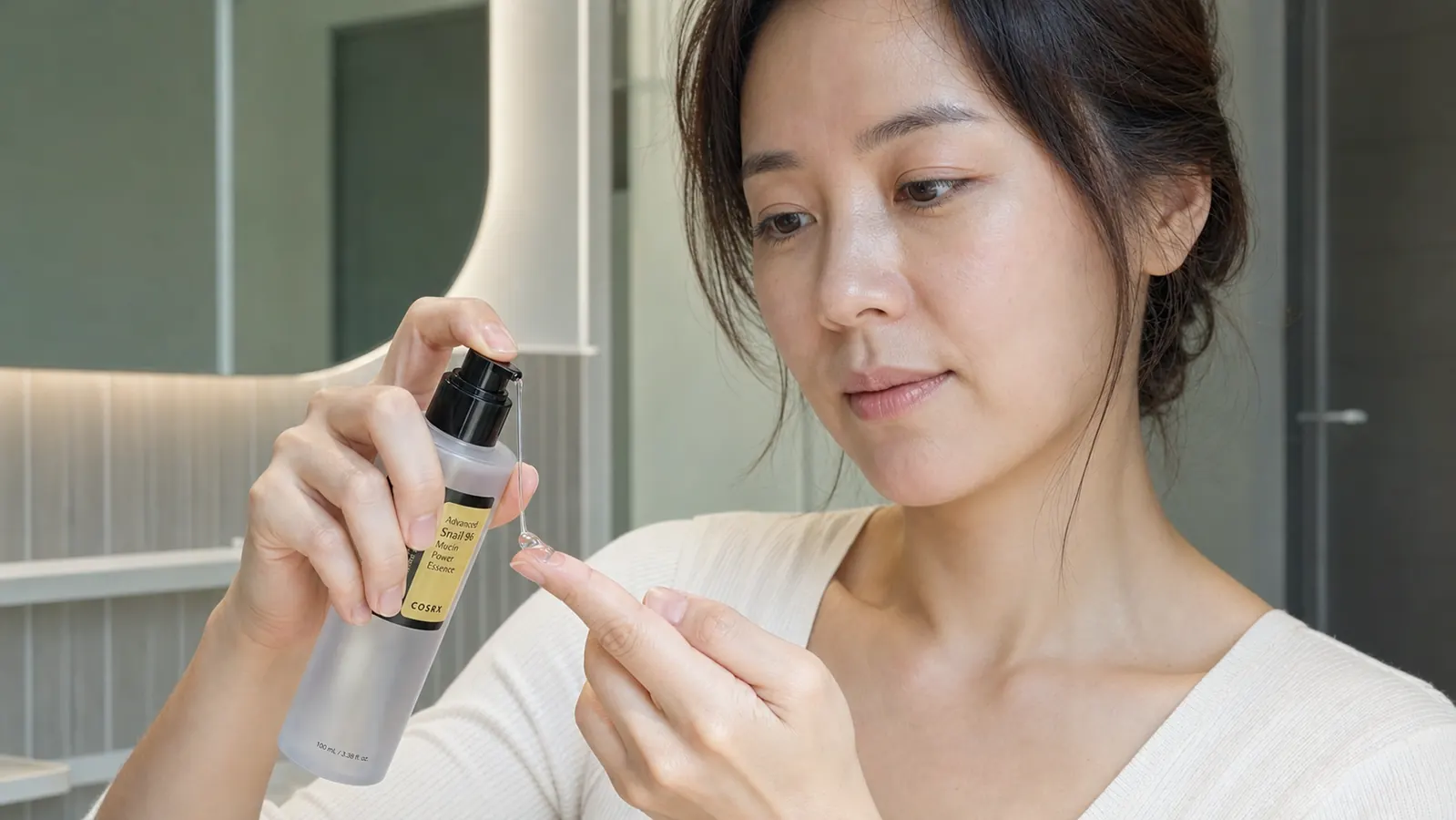
Snail mucin does not just hydrate. It builds the conditions under which every serum that follows it works better. That is the thing most people miss when they skip this step.
Step 4: Apply Your PDRN Product
With the snail mucin absorbed and your skin barrier already getting the hydration and support it needs, this is the moment for your PDRN serum or essence. The format matters here. If your PDRN product is a lightweight essence or low-viscosity serum, press it in with fingertips the same way you applied the snail mucin. If it is a slightly thicker serum or ampoule, warm it between your palms first to thin the texture before applying. Layering a thick product over a thinner one can cause pilling, and pilling means neither product is absorbing the way it should.
The medicube PDRN Pink Peptide Serum is one of the more popular PDRN options right now and works well in this pairing. It is thin enough to layer easily over the COSRX base without pilling, and the combination of niacinamide and peptides in the medicube formula complements the glycoproteins in the snail mucin rather than competing with them. Let the PDRN product absorb for 60 to 90 seconds before moving to moisturizer. If you see any balling up of product on your skin when you go in with moisturizer, you moved too fast.
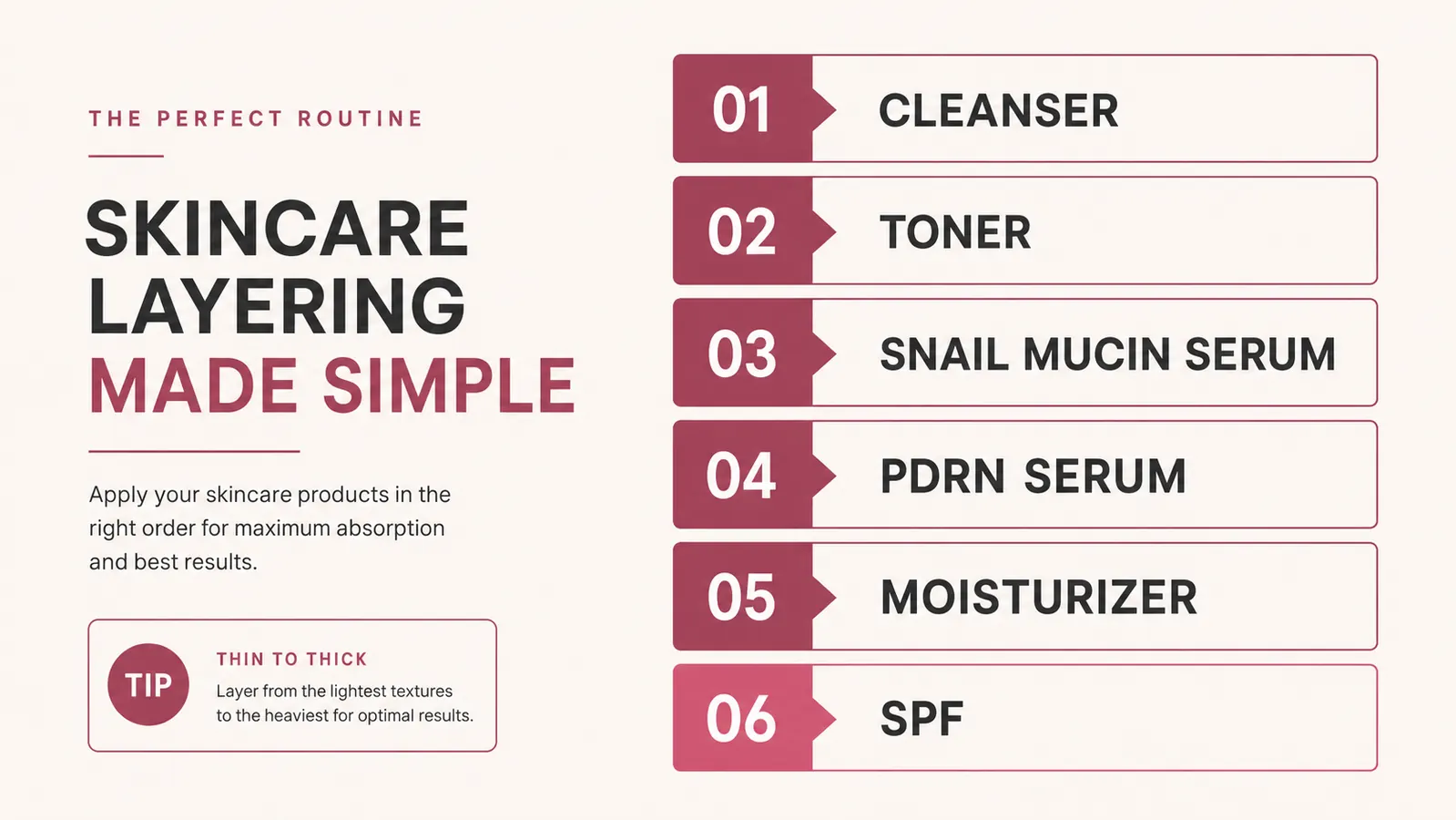
Step 5: Seal with Moisturizer
A moisturizer after two hydrating actives might feel redundant, but it serves a specific function in this routine: it creates an occlusive or semi-occlusive layer that slows transepidermal water loss and keeps everything underneath in place. Without it, much of the moisture your snail mucin serum pulled in will simply evaporate, especially if you are in a low-humidity environment or in air conditioning. The moisturizer does not need to be heavy. A lightweight gel cream or emulsion is fine for most skin types. If you are very dry, a richer cream will give you more barrier support overnight.
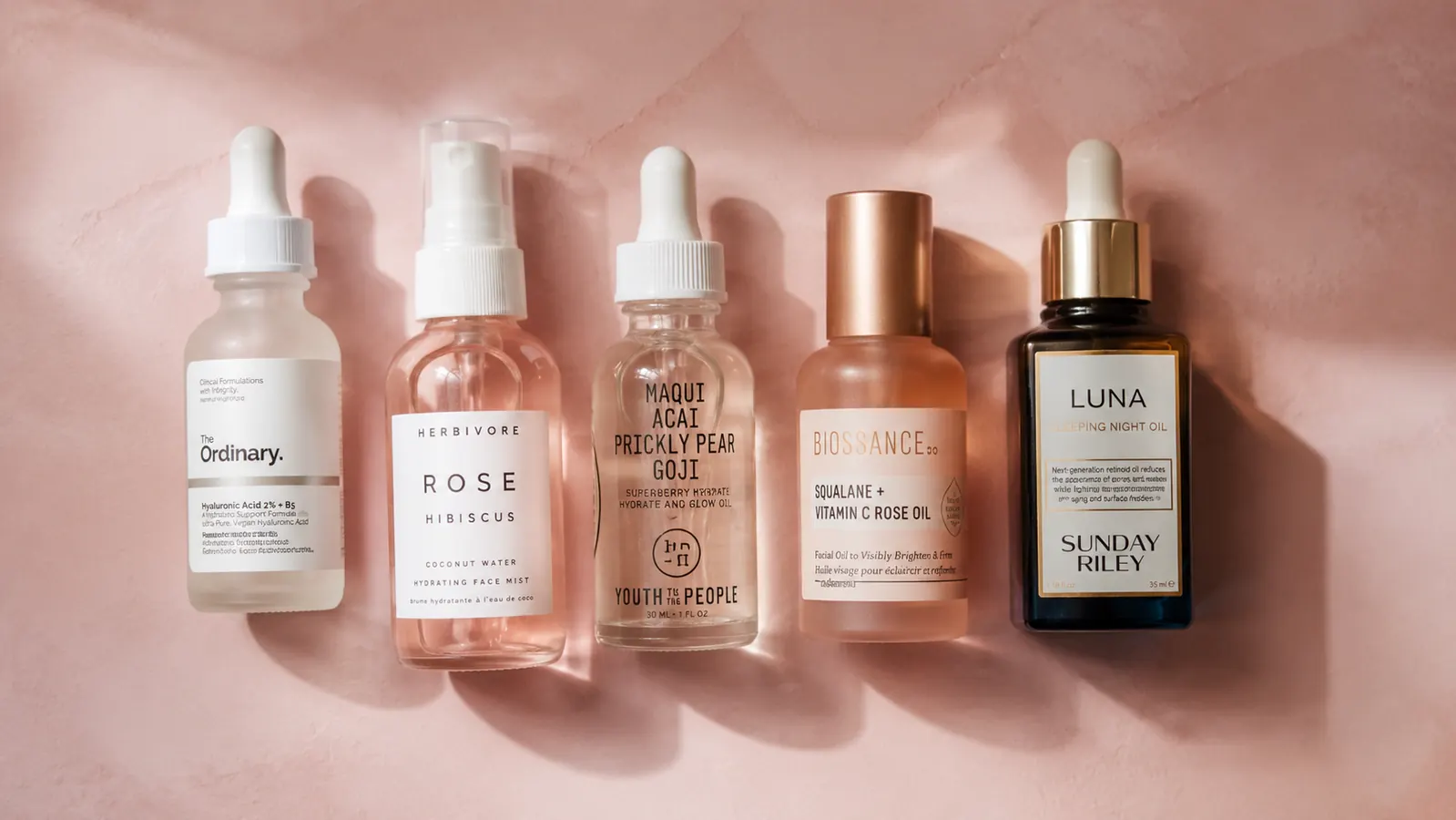
For daytime, this step happens before sunscreen. For nighttime, this is your last step. Some people like to add a facial oil on top of moisturizer at night for extra occlusion, which is fine and will not interfere with the serums you applied earlier. The general principle is that you are always moving from lighter to heavier textures, and from water-soluble to oil-soluble formulas.
What Else Helps: Supporting Ingredients That Work With This Pair
A few ingredients make this pairing work even better. Panthenol, also called provitamin B5, is one of the best additions to a repair-focused routine because it both attracts water and reinforces the skin barrier at the same time. If your toner or moisturizer contains panthenol, it is doing useful work in this context. Centella asiatica, which appears in a lot of K-beauty moisturizers and toners, supports the skin's own collagen-adjacent repair processes and pairs well with PDRN without interfering with the snail mucin. Ceramides in your moisturizer add another layer of barrier support and help seal in the active work happening underneath.
What to avoid on nights when you are using both serums: retinol, exfoliating acids (glycolic, lactic, salicylic), and vitamin C. These are all excellent ingredients with their own place in a routine, but they change the pH or structural environment of the skin in ways that can interfere with how snail mucin and PDRN sit and absorb. If you use retinol or acids, reserve those for alternate nights. This pairing works best when the skin is in repair and receptive mode, not actively being exfoliated or chemically stimulated.

How Often to Use This Routine
This routine is gentle enough for daily use, morning and evening, for most skin types. The COSRX Snail Mucin Serum contains no exfoliating acids at a concentration that would be irritating, and PDRN is not a sensitizing ingredient the way retinol or vitamin C can be. That said, if your skin is currently compromised, reacting to another product, or going through a barrier disruption event like a reaction to a new cleanser, give it a few days of simplified routine first before adding two new serums at once. Introducing one product at a time is always the safer approach when you are not sure what your skin is doing.
For results from the PDRN component specifically, give it a full four to six weeks of consistent use before judging. PDRN works by signaling the skin to repair itself, and that process is incremental and cumulative. The snail mucin delivers noticeable results faster, usually within a week or two in terms of surface texture and hydration. Think of the snail mucin as the short-term payoff and the PDRN as the long-game investment.
Who This Routine Is Best For
This pairing is particularly well suited to anyone dealing with a weakened or stressed skin barrier, dry or dehydrated skin in combination with fine lines or early signs of aging, post-inflammation recovery (after breakouts, reactions, or procedures), and anyone who is already spending on a PDRN product and wants to make sure they are actually absorbing it. It is also a good fit for people who want a simple, effective PM routine without a lot of steps. Two serums and a moisturizer is genuinely enough for most skin goals if the serums are the right ones.
Oily skin types sometimes wonder if they need a base serum at all before PDRN. They do. Even skin that produces a lot of sebum can be dehydrated in the surface layers, and sebum is not the same as moisture. The snail mucin will absorb quickly on oilier skin types without leaving a heavy or tacky finish, and the benefit of the priming effect applies regardless of skin type. If you want more detail on the COSRX serum as a standalone product before committing to it as a layering base, the full review is worth reading.
Most K-beauty routines are one product away from working better. This is usually the one they are missing.
The COSRX Snail Mucin 96% Serum is the serum more than 100,000 Amazon shoppers have tested and come back to reorder. It costs less than most moisturizers and does more groundwork than anything else in this price range.
Amazon Check Today's Price on Amazon →Related Guides on This Site
If you want to go deeper on the COSRX serum itself, including how it holds up after extended daily use and how it compares to newer PDRN serums on the market, the long-term review covers all of that. For the PDRN side of this pairing, the medicube PDRN review is a good starting point if you are still deciding which PDRN product to use alongside the snail mucin.